
Dakota County Criminal Records
A Dakota County criminal court record is the case-level file maintained by District Court after the prosecution files a complaint, citation, or other charging document. The record can begin with charges and probable-cause information, then grow as the case moves through first appearance, arraignment, omnibus or pretrial hearings, motions, plea negotiations, trial settings, verdict or plea, disposition, sentencing, probation, restitution, fines, and post-disposition events. It is broader than a charge listing because it shows how the court handled the case.
Dakota County criminal cases are handled in Minnesota District Court. Minnesota does not use separate municipal or justice courts for Dakota County trial-court records. City police may investigate and issue citations, the Dakota County Attorney may make charging decisions, and the Sheriff's Office may hold custody or warrant data, but the criminal case file is a District Court record. For charge-focused detail after arrest, use court charge records. For all case types, use Dakota County court records.
Search Dakota County Criminal Records
The main court search tool is MCRO Case Search. It allows searches by defendant name, case number, citation number, or attorney, with filters for Criminal case category, active or inactive status, filed date, date of birth, and Dakota County court location. MCRO can show the Register of Actions, criminal docket entries, available public documents, hearings, case status, financial entries, and disposition information. Dakota County also maintains a Criminal Complaint Search for recent complaints filed in Dakota County District Court.
- Open MCRO Case Search and accept the terms that identify online results as unofficial.
- Search by defendant name, criminal case number, citation number, or attorney.
- Filter by Criminal case category and select Dakota County as the court location.
- Open the case result and read the Register of Actions for charges, hearings, motions, disposition, and sentencing.
- Use Document Search by case number for public documents that are available online.
- Contact Court Administration when a certified copy, older file, or record not shown online is needed.
The Dakota County criminal complaint search covers recent criminal complaints filed in Dakota County District Court.
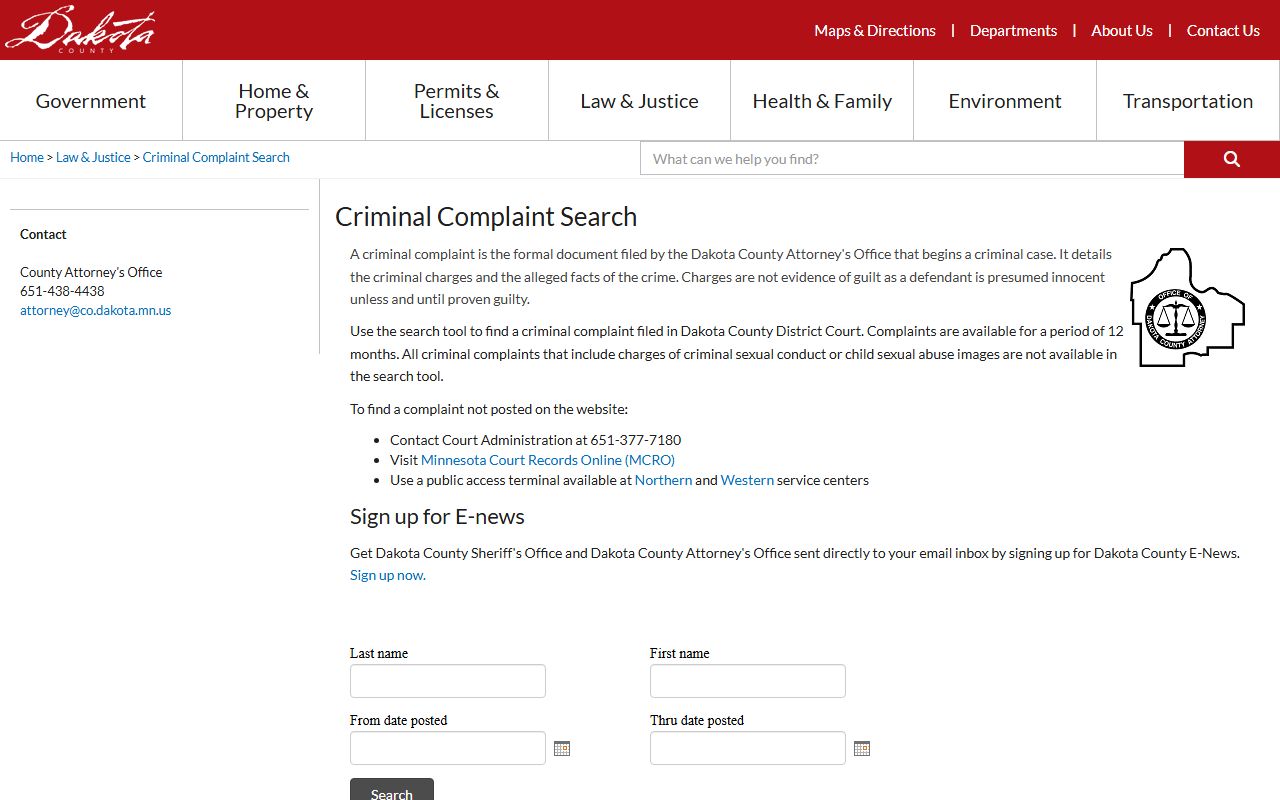
That complaint tool is useful near the start of a case, while MCRO is the broader route for the full criminal court record.
Dakota Criminal Case Stages
The criminal court record grows in stages. A complaint or citation begins the case. The first appearance or arraignment brings the defendant before the court. Pretrial hearings and omnibus hearings can address probable cause, evidence, motions, scheduling, and trial readiness. The case may resolve by plea, trial, dismissal, or other disposition. If there is a conviction or plea that leads to sentencing, the record can show jail, prison, probation, fines, fees, restitution, treatment-court conditions, and review hearings.
Case flow: Charges Filed › Arraignment › Pretrial / Motions › Plea or Trial › Disposition › Sentencing
- Charges Filed: a complaint, citation, or charging document opens the Dakota County District Court case.
- Arraignment: charges are addressed and plea or status issues may be taken up.
- Pretrial / Motions: omnibus, contested omnibus, motion, and readiness entries may appear in the docket.
- Plea or Trial: the case may resolve by guilty plea, verdict, acquittal, dismissal, or amended charge.
- Disposition: the record shows the outcome for each charge or for the case.
- Sentencing: the court may impose jail, prison, probation, fines, fees, restitution, or conditions.
Specialty court involvement can change the look of the docket. Dakota County Adult Drug Court supervision may add treatment, testing, judge/team review, and probation-related entries. Veterans Treatment Court may add recovery, sobriety, stability, peer mentor, and review-hearing information. The criminal case remains a District Court case even when the docket reflects treatment-court supervision.
What Criminal Records Show
A Dakota County criminal court record should be read field by field. The case number identifies the court file and may include Dakota County prefixes such as 19HA, 19AV, or 19WS and the CR case type. The defendant name ties the file to the person charged. Charge entries show alleged offenses, but each charge must be checked for current status. The Register of Actions is the main timeline for filings, hearings, orders, warrants, disposition, sentencing, and payments.
| Field | What It Shows |
|---|---|
| Case Number | Dakota County District Court criminal case identifier, often with a CR case type. |
| Defendant | The person charged in the criminal case. |
| Charges | Filed allegations, statute references, offense levels, amendments, reductions, or dismissals. |
| Complaint | Charging document and probable-cause statement when public and available. |
| Hearings | Arraignment, omnibus, contested omnibus, motion, trial, sentencing, review, or probation violation dates. |
| Plea | The defendant's formal answer, including guilty pleas or other recorded plea events. |
| Disposition | Current or final outcome for a charge or case, such as guilty, dismissed, acquitted, or amended. |
| Sentence | Jail, prison, probation, fines, fees, restitution, treatment terms, and conditions where ordered. |
| Warrant events | Bench warrants, failures to appear, recall events, or related court actions when public. |
The Dakota County Attorney page identifies the prosecuting office connected to charging decisions and county-attorney data.
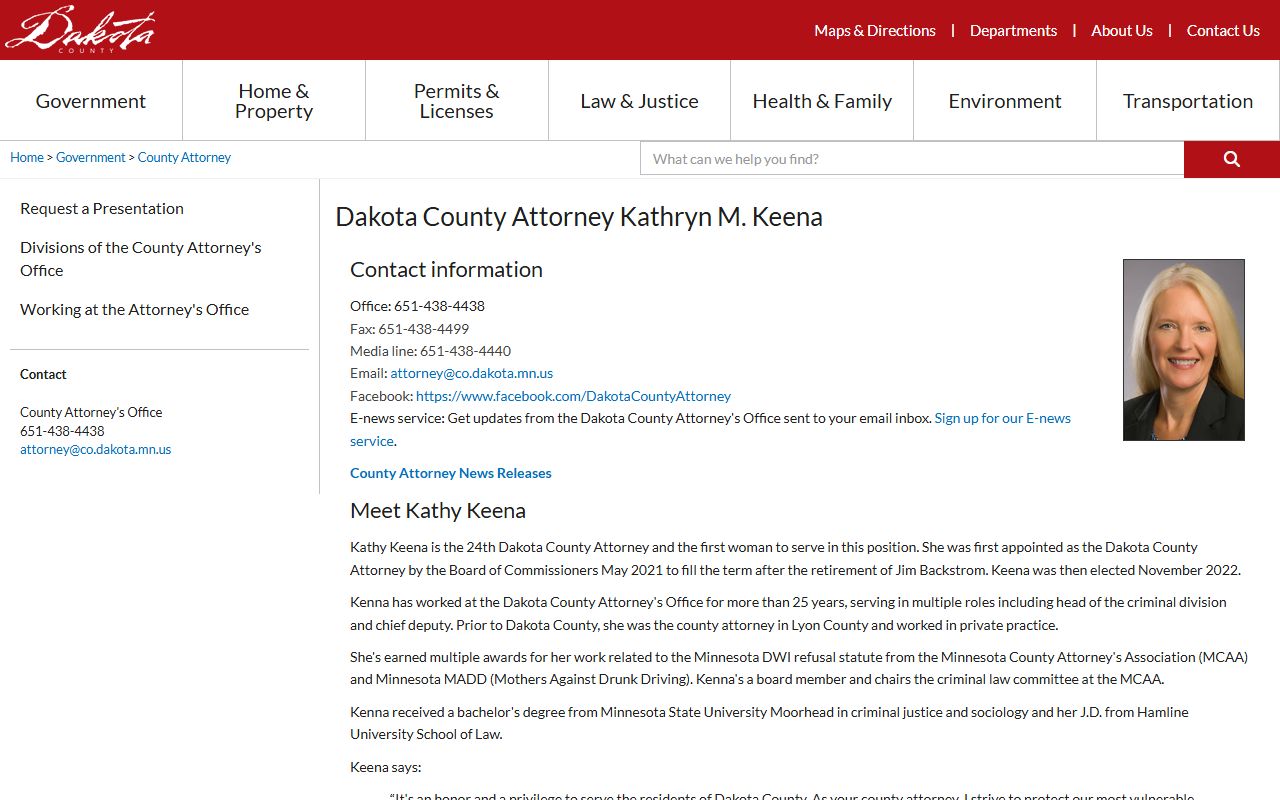
The prosecutor's role explains why complaint and charging information can involve both District Court records and county-attorney data practices requests.
Charges vs Convictions
A charge is an accusation filed in court. A conviction is an outcome after a guilty plea, guilty verdict, or court finding. Dakota County criminal court records can show charges that were later dismissed, reduced, amended, or resolved by acquittal. Reading only the first charge line can misstate the case. Always compare the charge entries with disposition and sentence entries before drawing a conclusion.
| Issue | Charge | Conviction |
|---|---|---|
| Meaning | An alleged offense filed by complaint, citation, or other charging document. | A final finding or plea that resolves the offense as guilty. |
| Timing | Appears early in the court record. | Appears after plea, verdict, or court finding. |
| Can change | May be amended, reduced, dropped, or dismissed. | May later be affected by appeal, correction, or expungement order. |
| How to verify | Check complaint and charge history. | Check disposition, sentencing, and final order entries. |
Read Dispositions and Sentences
Disposition is the outcome of a charge or case. A Dakota County criminal record may show guilty, not guilty, dismissed, acquitted, amended, continued, or other case-specific outcomes. Sentencing is the court order that follows a conviction or qualifying plea. It may include jail or prison time, stayed sentence, probation, fines, fees, restitution, treatment requirements, no-contact terms, monitoring, or review hearings. Financial entries may include fines, fees, court costs, bail, bond, and restitution.
Dakota County treatment-court entries can add context. Adult Drug Court is for adults with drug addiction who are charged with serious drug crimes and need close supervision. Veterans Treatment Court serves veterans dealing with addiction, mental health issues, or co-occurring disorders. These programs do not erase the criminal court record. They may affect the docket by adding supervision, compliance reviews, incentives, sanctions, probation terms, and later disposition or sentencing entries.
Note: A docket line can be shorthand, so use the final disposition and sentencing entries before treating a case as resolved.
Sealed vs Expunged Records
Restricted criminal court records are not handled like ordinary public files. Juvenile delinquency records are limited by Minnesota law and are not browsed like adult criminal files. Sealed and expunged records are hidden from ordinary public view under statute or court order. Domestic abuse, harassment, CHIPS, and civil commitment-related records also have specific online limits. MCRO remote access is narrower than courthouse public-terminal access, and both are narrower than access granted to parties or authorized agencies.
| Issue | Sealed | Expunged |
|---|---|---|
| Public visibility | Hidden from ordinary public access by rule, statute, or order. | Sealed through Minnesota criminal expungement authority. |
| Record status | The record still exists but is not open to the general public. | The record is sealed; it is not physically erased in every system. |
| Who may access | Courts, parties, or agencies may have access if law or order allows. | Agency and court access may remain under statute or court order. |
| Process | Depends on case type, rule, statute, or judge's order. | Usually requires a petition under Minnesota expungement law unless an automatic route applies. |
The Minnesota criminal expungement statute describes the petition process for sealing many criminal records.
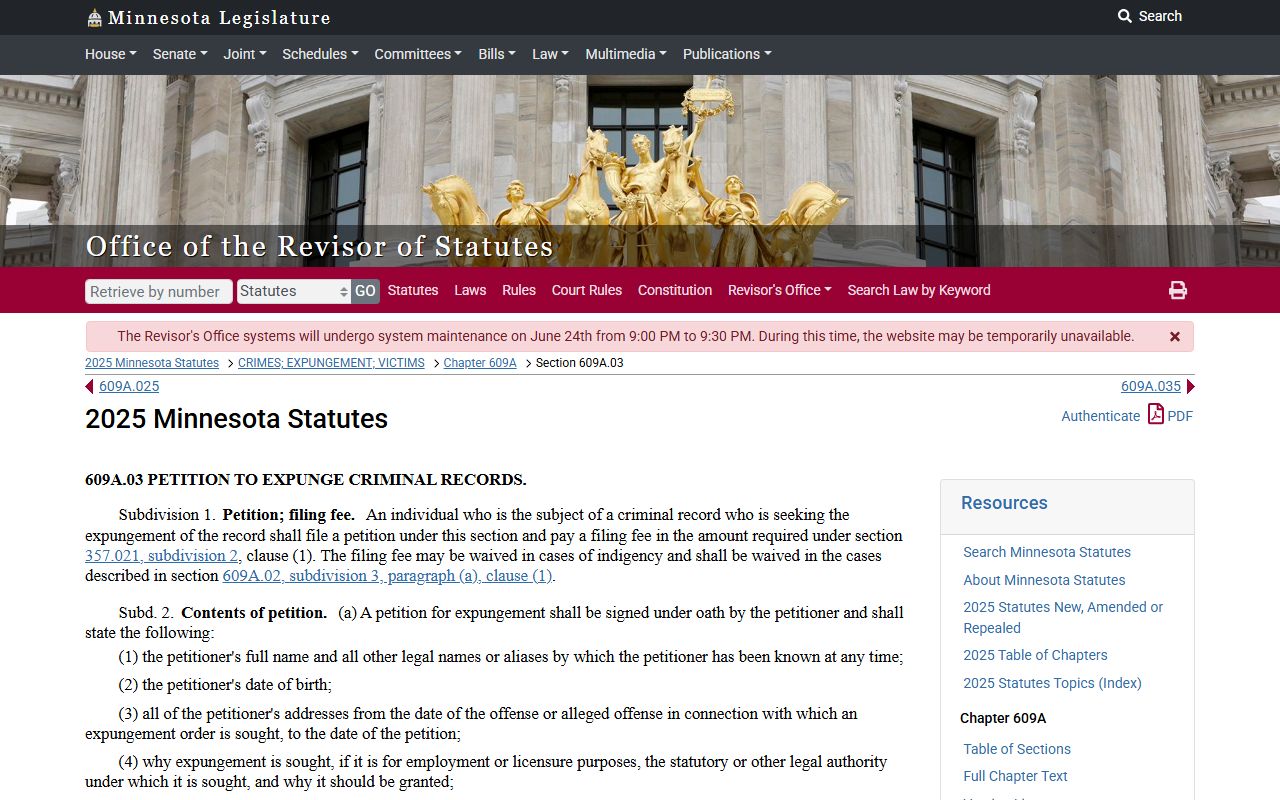
In Dakota County, expungement petitions are filed in District Court and should identify the case, charges, affected agencies, legal basis, and reason for sealing.
Dakota Criminal Record Access
Adult criminal court records are generally public unless a statute, court rule, or court order restricts access. MCRO is the online access route for many public Dakota County criminal court records, but it is unofficial and limited. Certified copies must come from Court Administration. Public documents filed on or after July 1, 2015 are generally available online for major and minor criminal cases when they are public and remotely accessible. Older documents may require local court contact.
Key Authorities:
Minnesota Rule of Public Access 4 identifies nonpublic court-record categories and protected criminal-adjacent records.
Minnesota Rule of Public Access 8 governs inspection, copying, bulk distribution, and remote access limits.
Minn. Stat. 260B.171 limits access to juvenile court legal records.
Attorney and Defender Records
The Dakota County Attorney's Office is relevant to criminal complaints, charging decisions, victim and witness work, discovery, and county-attorney-maintained data. Research identified Kathryn M. Keena as Dakota County Attorney, with office phone 651-438-4438 and attorney@co.dakota.mn.us for office contact. Dakota County public data requests for county attorney data route to attorney@co.dakota.mn.us or to the County Attorney's responsible authority by mail. That route is for county attorney data, not certified court records.
A person charged with a misdemeanor, gross misdemeanor, or felony that may involve jail can ask the court to appoint a public defender. The Minnesota Judicial Branch public defender information explains the online application route and eligibility concept.
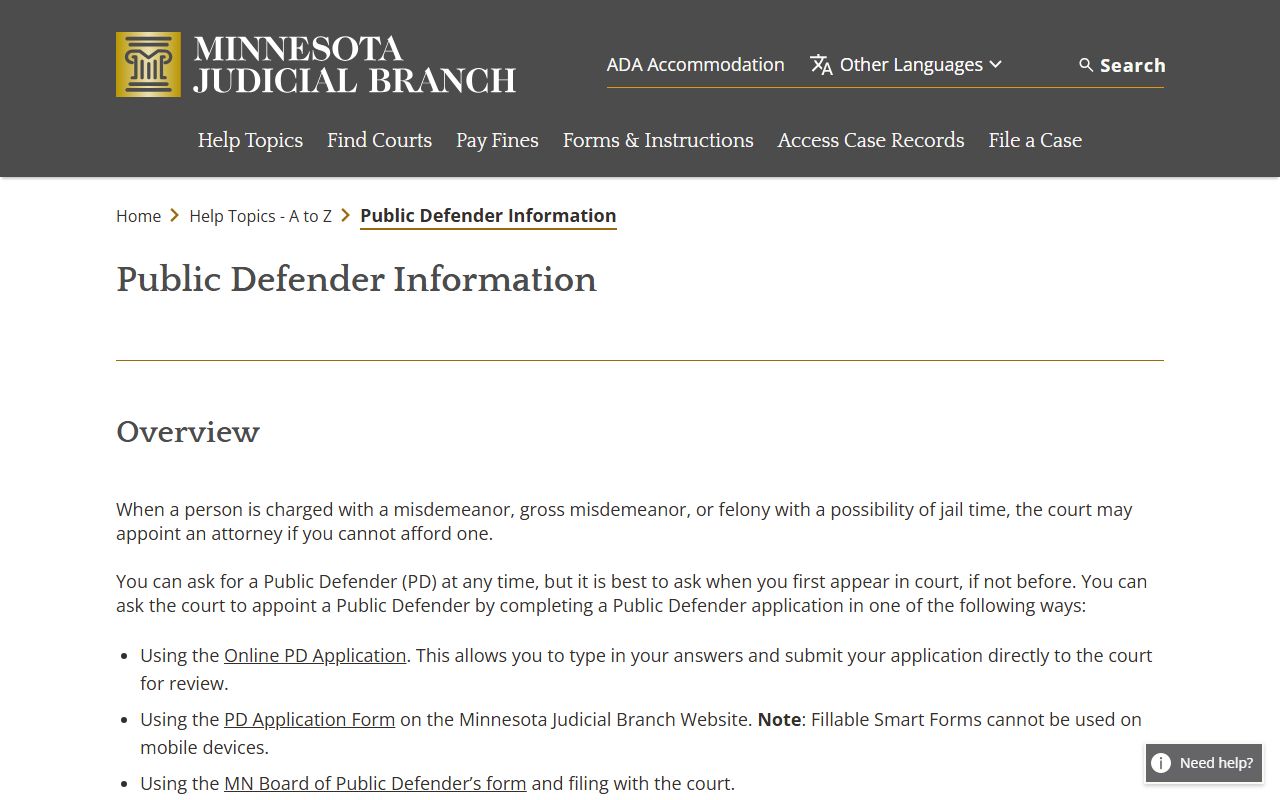
Public defender information is part of the criminal case process because appointment, counsel appearances, and later hearings can appear in the court record.
The Minnesota Board of Public Defense office directory lists Dakota County in the First Judicial District public defender structure.
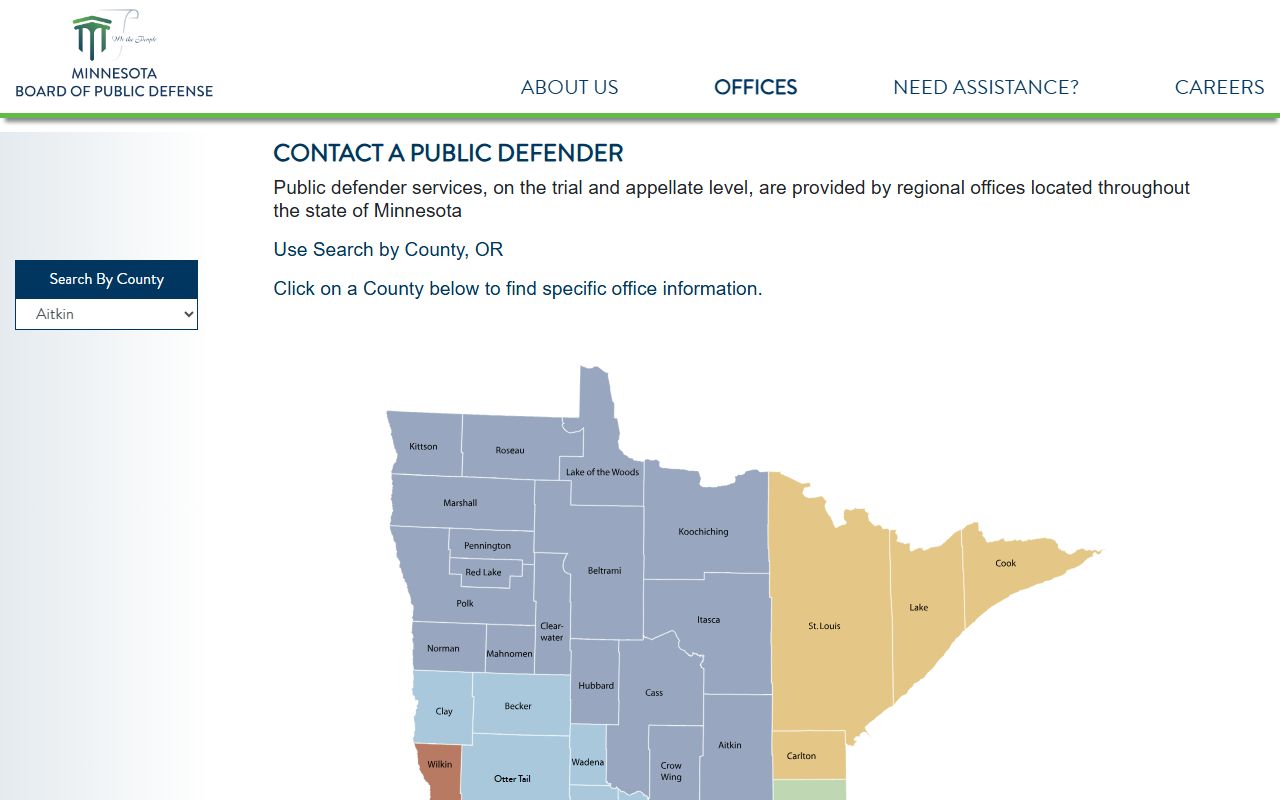
For court-appointed counsel questions, use court and public defender channels rather than treating private background-check results as official case information.
Restricted Dakota Criminal Records
Several Dakota County criminal or criminal-adjacent records are restricted. Juvenile delinquency records are maintained separately and have limited access. MCRO remote access excludes CHIPS and Juvenile Delinquency Felony 16 case types from internet display even where courthouse access may differ. Domestic abuse/OFP and harassment restraining order case types have special internet-display limits. Civil commitment documents, medical records, pre-petition screening reports, and court-appointed examiner reports are also restricted.
Background checks raise a separate issue. A casual court-record lookup is not the same as an FCRA-compliant consumer report for employment, housing, credit, insurance, or similar purposes. Dakota County criminal court records should be verified with MCRO or Court Administration, and certified copies should be obtained when official proof is required.
Important: Do not treat an arrest, complaint, or charge line as a conviction without checking disposition and sentencing entries.